
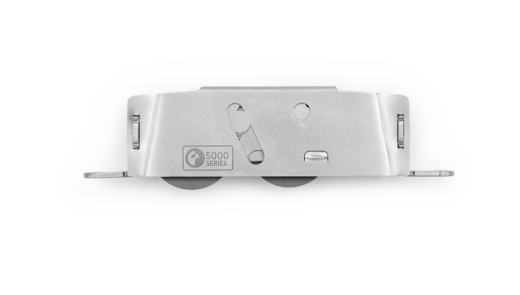
As passive and energy-efficient building standards become more widely adopted, every element of the building envelope is being examined more closely. Airtightness, thermal efficiency and long-term performance are now essential to delivering reliable low-energy outcomes.
Sliding doors, while highly desirable for daylight, ventilation and connection to outdoor spaces, are often one of the most challenging elements to optimise in passive design. Large glazed panels introduce weight, movement and tolerances that can compromise airtight seals over time. While attention is typically focused on glazing, frames and installation methods, the role of high-performance rollers is frequently overlooked.
Yet rollers play a critical role in how sliding doors operate day after day. By supporting smooth movement, reducing resistance and maintaining alignment, they directly influence airtightness, usability and long-term energy efficiency.
- Why Sliding Door Performance Matters in Passive Design
- What Defines High-Performance Rollers?
- Low Friction Rollers and Energy Efficiency
- The Role of Rollers in Passive House Sliding Doors
- Durability, Maintenance, and Lifecycle Performance
- Why Rollers Deserve More Attention in Energy-Efficient Design
Why Sliding Door Performance Matters in Passive Design
Passive House and energy-efficient construction are built around a few core principles:
- Exceptional airtightness
- High thermal performance
- Minimal uncontrolled air leakage
- Consistent performance over the building’s lifespan
Sliding doors must meet these standards while remaining functional and easy to use. Unlike fixed elements, sliding doors are dynamic – they are opened, closed and adjusted repeatedly over many years.
Common performance challenges include:
- Rising resistance due to component wear
- Door misalignment from uneven loads or friction
- Seal wear caused by drag or partial closure
- Reduced usability as operation becomes more difficult
Even minor increases in friction can prevent a door from closing fully, creating gaps that undermine airtightness. This highlights why component quality matters beyond visible elements like frames and glazing. Internal hardware, particularly rollers, has a direct influence on whether passive design intent is maintained in real-world use.
What Defines High-Performance Rollers?
Not all rollers are designed to meet the demands of energy-efficient construction. High Performance Rollers are distinguished by their ability to operate smoothly under significant loads while maintaining precision over time.
Key characteristics typically include:
- Precision engineering and tight tolerances
Ensures consistent alignment and predictable movement. - High load capacity
Designed to support large, heavy glazed panels common in passive projects. - Material quality
Often incorporating hardened steel components and precision bearings rather than moulded plastics. - Longevity under frequent use
Engineered to perform reliably despite daily operation. - Resistance to environmental stress
Maintains performance despite temperature changes, humidity and building movement.
These features allow rollers to function as a stability system for sliding doors, rather than a consumable component that degrades quickly.
Low Friction Rollers and Energy Efficiency
Low friction is not just a usability benefit — it is directly linked to energy performance. Low friction rollers reduce the force required to move a door, which has several flow-on effects.
Performance benefits include:
- Reduced strain on door frames and tracks
- Less wear on seals caused by dragging or uneven movement
- Improved ability for doors to close fully and evenly
- Lower likelihood of gaps forming over time
From an occupant’s perspective, smoother movement also improves accessibility and encourages correct use. Doors that operate effortlessly are more likely to be fully closed and sealed, supporting consistent airtightness.
Over the long term, this contributes to energy efficiency by reducing unwanted air leakage and helping sliding doors perform as intended within the thermal envelope.
The Role of Rollers in Passive House Sliding Doors
Passive House sliding doors often feature thicker glazing, heavier frames and multi-layer sealing systems. These characteristics place higher demands on internal hardware.
Roller performance becomes particularly important in this context:
- Heavy door panels require stable load distribution
- Smooth, predictable movement is essential to protect seals
- Reduced friction minimises wear on tracks and gaskets
- Consistent alignment supports airtight door design over time
In Passive House sliding doors, rollers are not simply facilitating movement – they are supporting the entire sealing strategy. When rollers perform consistently, doors remain square, seals engage correctly and airtightness targets are easier to maintain throughout the building’s life.
Durability, Maintenance, and Lifecycle Performance
For architects, builders and specifiers, performance must be evaluated over decades rather than months. Roller quality has a significant impact on lifecycle outcomes.
High-quality roller systems can deliver:
- Reduced maintenance and adjustment requirements
- Lower risk of door drag, binding or failure
- Fewer call-backs and remedial works
- More predictable long-term performance
When assessed through a whole-of-life lens, investing in durable, low friction components often proves more sustainable than short-term cost savings. Longer-lasting rollers reduce material waste, extend system life and support the broader goals of energy-efficient design.
Why Rollers Deserve More Attention in Energy-Efficient Design
Rollers are a classic example of a “hidden” performance driver. They are rarely visible once installed, yet their influence on usability, airtightness and durability is substantial.
Giving rollers greater consideration allows:
- Better alignment between design intent and real-world performance
- More reliable outcomes in passive and low-energy buildings
- Stronger support for heavier, more complex door systems
- Early-stage specification decisions that reduce future risk
As buildings continue to evolve toward higher performance standards, the importance of well-engineered components becomes more pronounced. Rollers may be small, but their role in supporting sustainable, high-quality construction is significant.
While often overlooked, high-performance, low-friction rollers play a meaningful role in the success of Passive House and energy-efficient design. By supporting smooth operation, protecting airtight seals and delivering long-term reliability, they help sliding doors perform as true contributors to the building envelope – not weak points within it.
With decades of experience in precision engineering, Anthony Innovations specialises in the design and manufacture of high-performance roller systems for demanding architectural and industrial applications. This focus on load handling, low-friction movement and long-term durability reflects the performance requirements seen in passive and energy-efficient design.